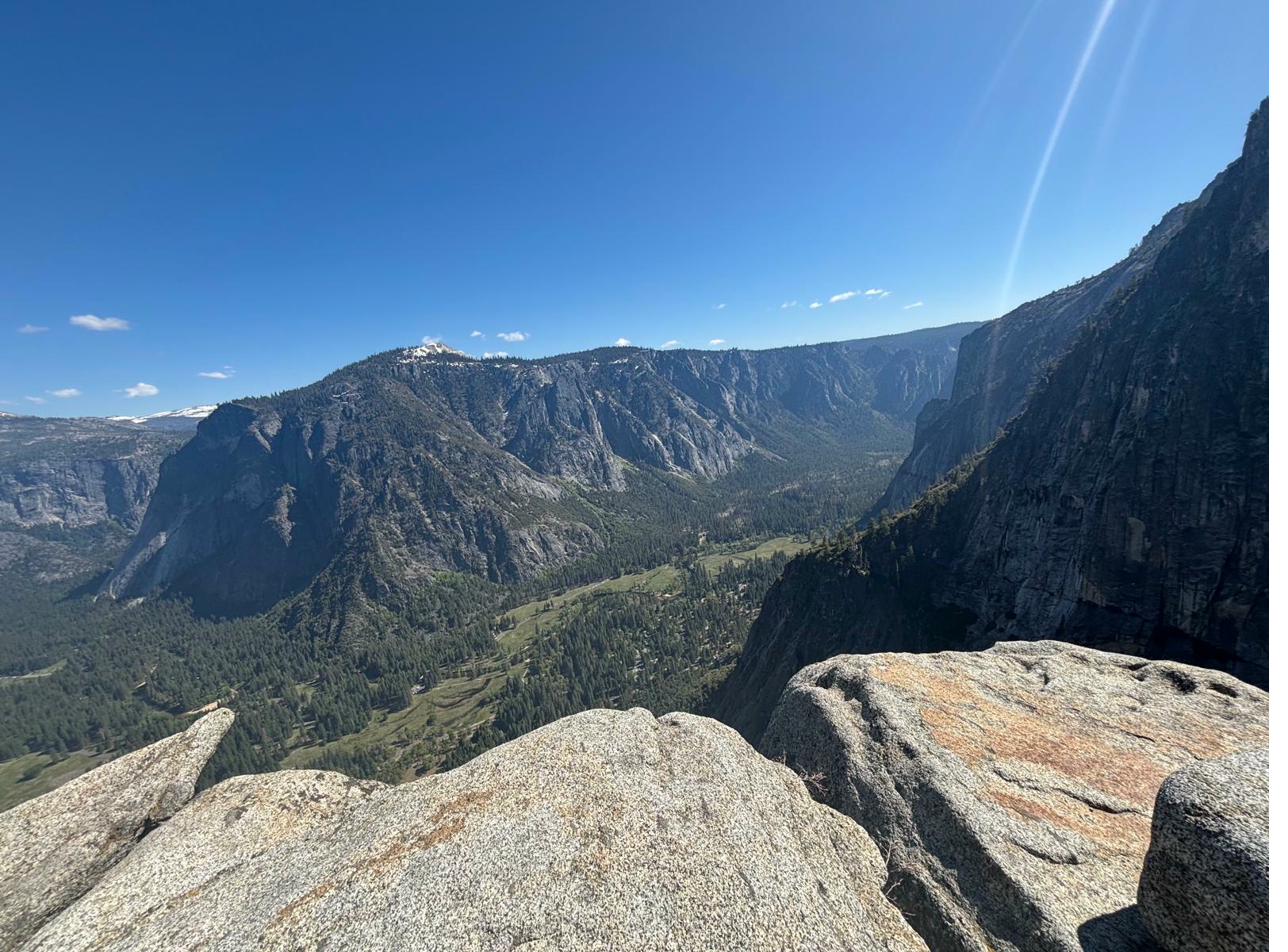
Yosemite is one of the most photographed landscapes on earth — but that doesn't mean getting great shots is easy. Timing, positioning, and knowing exactly where to be when the light is right makes all the difference. From our Yosemite West cabins, we have an extraordinary access advantage: we're already inside the park, 20 minutes from Tunnel View and 15 minutes from Glacier Point.
Your Biggest Advantage: Staying Inside the Park
Most photographers drive to Yosemite from outside the park, which means by the time they pass through the entrance, pay their fee, and reach Tunnel View, sunrise is already over and parking is fighting with them. From our cabins, you can be at Tunnel View by 5:50AM after a 5:30AM departure — before a single tourist has arrived, before the light breaks over the rim, and before anyone else has set a tripod.
That access fundamentally changes what's possible photographically — and it's only available if you sleep inside the park.
Sunrise Spots (Arrive Before 6AM in Summer)
1. Tunnel View — The Classic
The most iconic viewpoint in Yosemite: El Capitan on the left, Bridalveil Fall tumbling on the right, Half Dome centered perfectly at the far end of the Valley. Spring mornings fill the Valley with photogenic mist. Winter offers snow-dusted granite catching the first orange light. Drive from cabins: 20 min.
2. Valley View
On El Portal Road entering the Valley, Valley View frames El Capitan against the Merced River. At peak spring flow, the reflection in still water before 7AM is extraordinary. Far fewer photographers know this spot, giving you room to work.
3. Bridalveil Fall at Dawn
The 0.5-mile paved walk to the base takes 10 minutes. At peak flow (March–May), mist drifts back across the parking area. Arriving at first light, you'll often have the entire area to yourself. Late spring morning light creates rainbows in the spray if you position correctly.
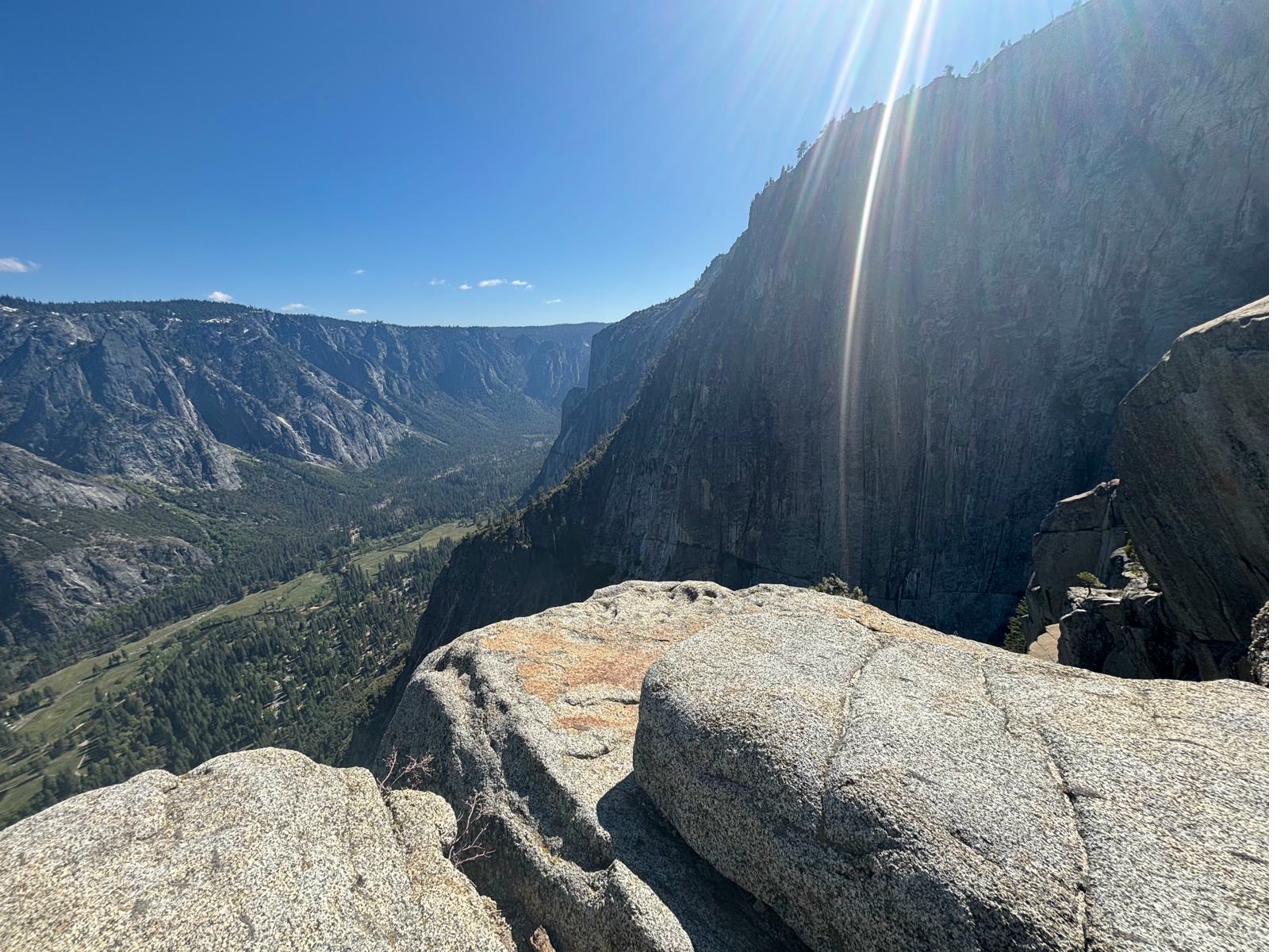
The Sierra Nevada forest surrounding our Yosemite West cabins offers compelling photography right outside your door.
Golden Hour & Sunset Shots
4. Glacier Point — 15 Minutes from the Cabin
Glacier Point sits 3,214 feet directly above Yosemite Valley. Late afternoon light on Half Dome from this viewpoint is arguably the most dramatic photograph in the park — the face turns orange-pink in the last hour before sunset. Open late May through early November only (Glacier Point Road closes in winter).
5. Sentinel Dome Summit
A moderate 2.2-mile roundtrip from the Glacier Point Road trailhead. The dome summit offers a full 360-degree view including a dramatic look at the Half Dome face in afternoon light. Getting there at 5PM in September with clear skies is unforgettable.
6. Cook's Meadow Reflection
On calm spring mornings, standing water in Cook's Meadow on the Valley floor mirrors Half Dome perfectly. Set up low with a wide angle. Golden hour light turns the granite pink above the reflection. This is among the most extraordinary — and accessible — shots in the park.
Wide-angle lens (16–24mm equivalent) for Valley compositions. 70–200mm for wildlife and waterfall detail. A sturdy tripod is the single biggest quality upgrade for Yosemite photography — you'll use it at sunrise, for long exposures at waterfalls, and for Milky Way shots.
Waterfall Photography
7. Yosemite Falls Long Exposure
North America's tallest waterfall. Shoot in early morning shade from the Valley floor with a tripod. A 0.5–1 second shutter creates silky water while retaining texture. Peak flow: March–May. Often dry by late August.
8. Vernal Fall Mist Trail
The Mist Trail lives up to its name — you will get wet. Bring a waterproof bag for your camera. The payoff: dramatic close-up waterfall images at extremely short distances, with natural diffusion from the mist. Shoot in morning shade for the best color rendition.
Night Sky & Milky Way Photography
Yosemite West sits at 6,000 feet with virtually no artificial light within miles. On clear nights around the new moon from April through September, the Milky Way core is visible with the naked eye from our cabin decks — and photographable with any modern mirrorless or DSLR camera.
Settings to start with: ISO 3200–6400, f/2.8 or wider, 20-second shutter (the "500 rule" divided by focal length). Point southeast between 10PM–2AM in summer to find the Galactic center. Sierra Nevada pine silhouettes and the cabin roofline make compelling foreground elements.
Both cabins have outdoor deck space with open sky views. September and October offer the darkest skies of the year at our elevation. Bring a red-light headlamp and a star chart app (SkySafari or Stellarium) to identify constellations and plan your shots.
Wildlife Photography Near Yosemite West
Mule deer visit the Yosemite West neighborhood regularly — often visible from the cabin in early morning and dusk. The Valley floor meadows (Cook's, Stoneman) offer reliable deer and occasional black bear sightings. A 200–400mm lens is ideal. California law and park regulations prohibit approaching or feeding wildlife.