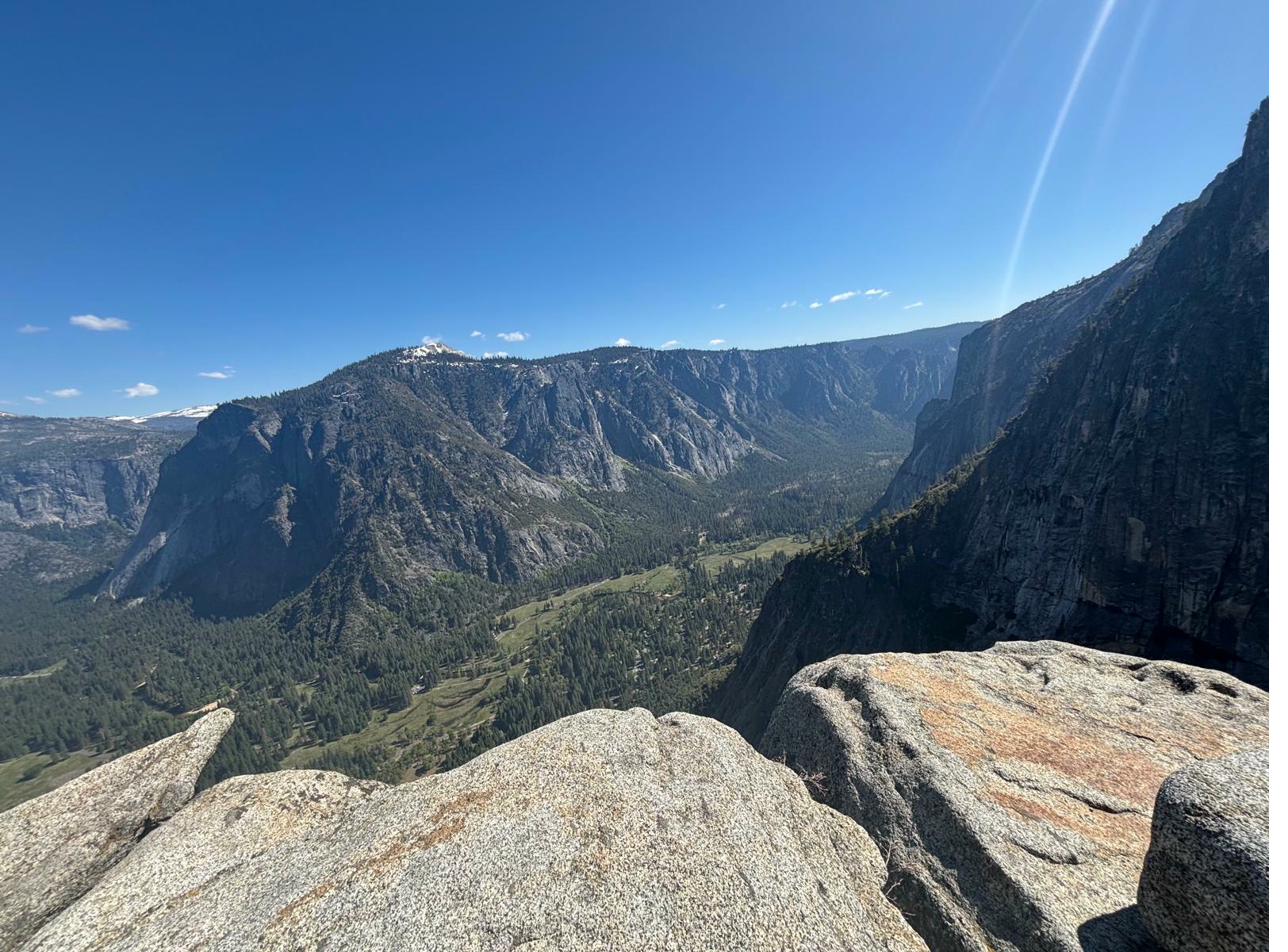
Standing next to a giant sequoia for the first time is one of those experiences that genuinely stops people mid-sentence. The scale is incomprehensible until you're there — a tree that was already 1,000 years old when Columbus sailed, wider at its base than most living rooms, with bark so thick and red it almost looks painted. Mariposa Grove has over 500 of them.
As the largest sequoia grove in Yosemite National Park, Mariposa Grove sits at the park's southern end — just 15 minutes from Yosemite West Cabins. For guests staying with us, it's genuinely one of the easiest half-day trips in the park: drive down, explore for 2–3 hours, and be back at the cabin for lunch.
Location advantage: From Yosemite West, you approach Mariposa Grove via Wawona Road — you're already inside the park, so there are no entrance gate queues. The grove parking lot fills by 9 AM on summer weekends. Leave by 7:30 AM to guarantee a spot.
What Are Giant Sequoias — and Why Are They Here?
Giant sequoias (Sequoiadendron giganteum) are the world's largest trees by volume. They're found only on the western slope of the Sierra Nevada, in a narrow elevation band between 4,500 and 7,000 feet — which is precisely where Mariposa Grove sits. They're not the tallest trees (that's the coastal redwood) nor the oldest (that's the bristlecone pine), but nothing on Earth grows as massive.
The largest trees in Mariposa Grove are between 1,800 and 2,700 years old. They were saplings when the Roman Empire was at its peak. Their survival secret is paradoxical: they depend on fire. The thick, tannin-rich bark is nearly fireproof, and sequoias actually need the heat of low-intensity fires to open their cones and clear the forest floor for seedlings. The grove was heavily restored between 2015 and 2022 after decades of fire suppression changed its ecology.
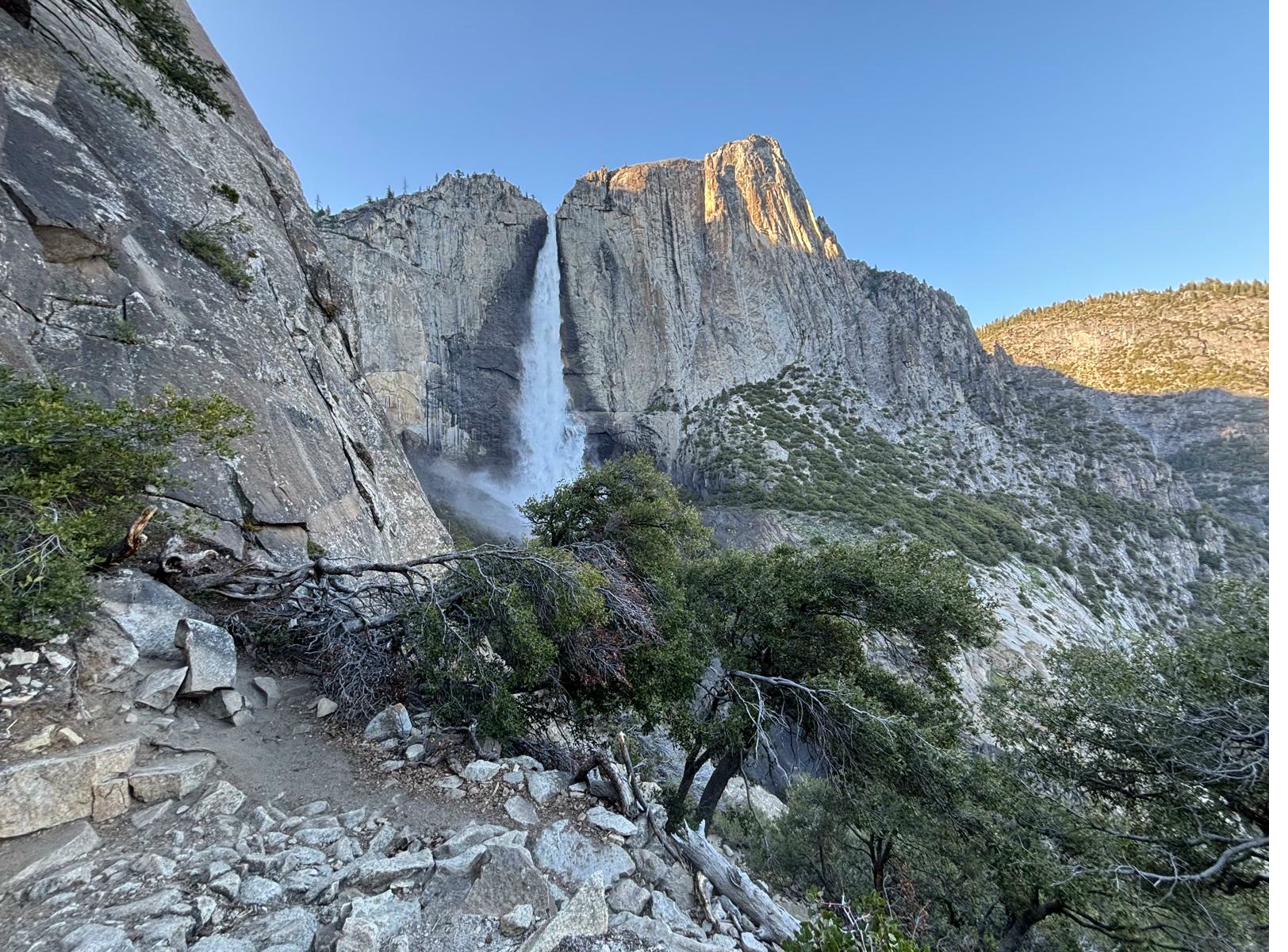
Morning light through the upper grove — arrive early for this quality of light and empty trails
The Trails: Which One Should You Take?
Mariposa Grove has a well-maintained trail network with options from a flat 20-minute stroll to a full half-day loop. The grove is split into a lower section (most famous trees, paved paths) and an upper section (quieter, more old-growth feel, steeper terrain).
Lower Grove Loop — Grizzly Giant & California Tunnel Tree
The essential Mariposa Grove experience. This loop takes you to the Grizzly Giant — the largest tree in the grove at 209 feet tall and 34 feet in diameter — and the California Tunnel Tree, which was carved in 1895 so stagecoaches could pass through (the tree is still alive). The Bachelor and Three Graces cluster is along this route too: four sequoias growing so close together they look like a family portrait. This trail is paved and accessible.
Full Grove Loop — Upper & Lower Combined
Add the upper grove to see the Fallen Monarch (a hollowed, fallen sequoia that once sheltered cavalry horses) and the Clothespin Tree, a pair of fused sequoias with a dramatic gap. The upper grove has fewer visitors and more of the classic old-growth atmosphere. The Wawona Point overlook at the top gives a rare panoramic view across the Southern Sierra — worth the climb on clear days.
Welcome Plaza to Grizzly Giant — Out and Back
If you only have an hour or have young children or mobility considerations, this paved out-and-back takes you directly to the Grizzly Giant and returns via the same route. You'll still see the Bachelor and Three Graces cluster along the way. The Welcome Plaza has restrooms, interpretive signs, and a small bookstore.
The Trees You Cannot Miss
The Grizzly Giant
The undisputed centerpiece of Mariposa Grove. At an estimated 2,700 years old, it's one of the oldest living sequoias on Earth. Its first branch — 100 feet off the ground — is wider than most trees you've ever seen. The trunk leans visibly and has survived countless fires, evidenced by the massive fire scars at its base. Standing at its base and looking up produces a kind of vertigo.
The California Tunnel Tree
Carved in 1895 to allow horse-drawn stagecoaches to pass through, this tree somehow survived the surgery and continued growing. The tunnel is about 10 feet wide. Unlike the famous dead "Fallen Tunnel Tree" in the upper grove (which collapsed in 1969 under heavy snow), the California Tunnel Tree is very much alive — adding roughly a foot of girth every 100 years despite the gap in its base.
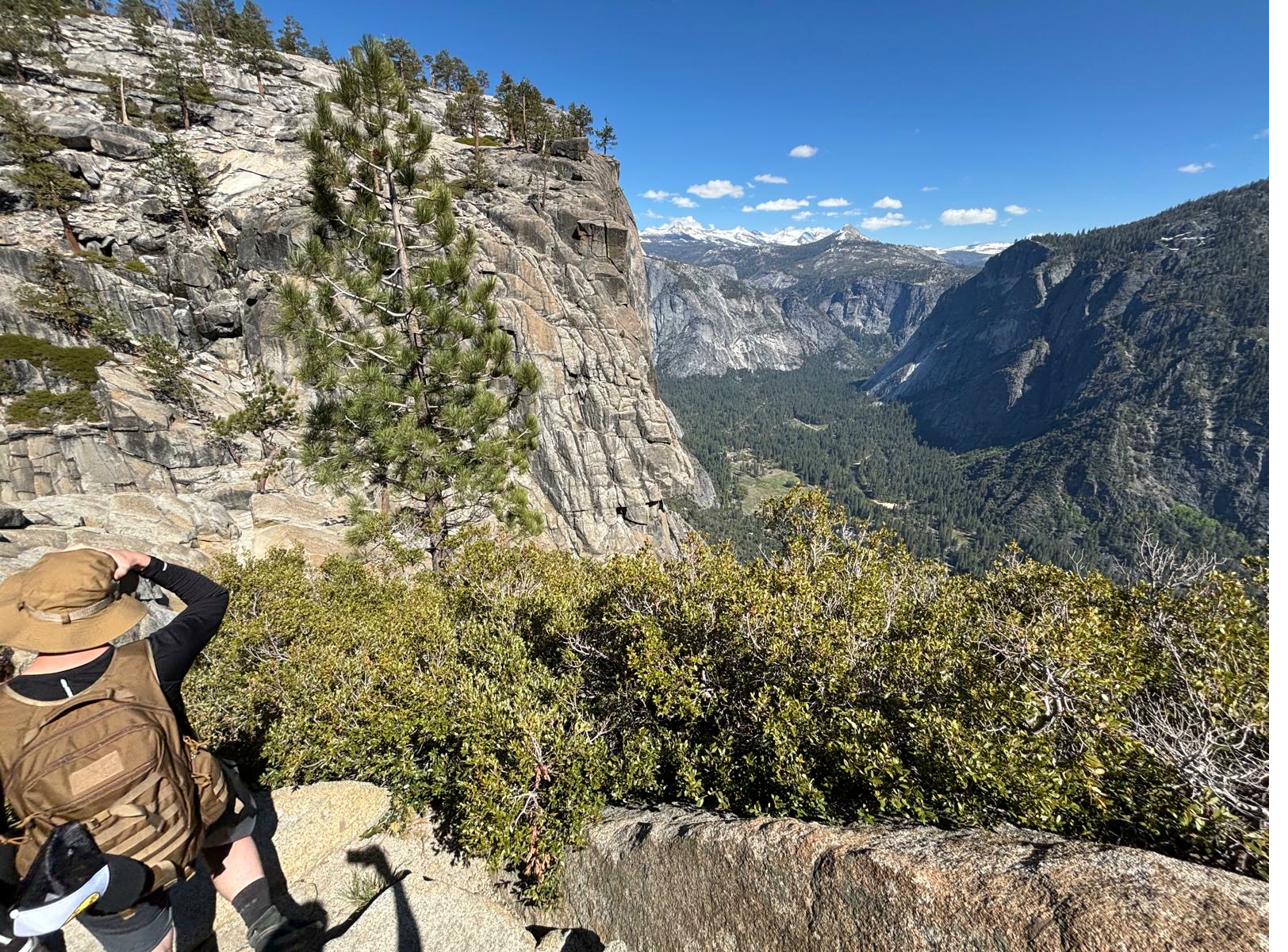
The view from upper Mariposa Grove toward the Southern Sierra — clear days reveal ridgelines 50 miles distant
The Fallen Monarch
Upper grove. This enormous fallen sequoia has been lying on the forest floor for centuries and is still mostly intact — sequoia wood contains so much tannin it resists decomposition for hundreds of years after falling. An 1899 photograph shows U.S. Army cavalry soldiers on horseback standing on top of it. It's still exactly as wide.
Practical Information
| Detail | Information |
|---|---|
| Location | Southern Yosemite, off Wawona Road (CA-41) near South Entrance |
| From Yosemite West | ~15 minutes south on Wawona Road |
| Parking | Mariposa Grove parking area — fills by 9 AM in summer |
| Shuttle | Free seasonal shuttle from Wawona Hotel when lot is full |
| Entrance fee | Covered by park entry ($35/vehicle, 7 days) |
| Restrooms | Welcome Plaza and Restroom Building along the trail |
| Dogs | Not permitted on trails in Mariposa Grove |
| Bikes/e-bikes | Not permitted on grove trails |
| Cell service | Minimal — download AllTrails map offline before arriving |
When to Visit Mariposa Grove
🌸 Spring (April–May)
Snow may linger at higher elevations through April. Lower grove trails are usually open. Wildflowers bloom along the trail edges. Creeks run full from snowmelt. Ideal light for photography.
☀️ Summer (June–August)
Peak season — all trails open but very crowded. Arrive before 8 AM or after 4 PM to miss the worst of it. Hot afternoons in the 80s at lower elevations, but the grove itself stays cool under the canopy.
🍂 Fall (September–November)
Best overall time. Crowds thin dramatically after Labor Day. The dogwood and black oaks turn gold and orange against the red-brown sequoia bark — genuinely spectacular color. Cool, comfortable temperatures for hiking.
❄️ Winter (December–March)
Upper grove trails are typically closed due to snow. Lower grove may be accessible depending on conditions. Snow-covered sequoias are breathtaking. Check NPS road conditions before driving — Wawona Road can close during heavy storms.
Photography Tips for Mariposa Grove
The biggest challenge with sequoia photography is scale — without something for reference, even enormous trees can look underwhelming in photos. Use people, trails, or other trees to anchor the scale. Early morning light (7–9 AM) creates dramatic shafts through the canopy. Wide-angle lenses work best for capturing the full height; shooting at the base looking up is the classic approach. The soft light after golden hour can be beautiful — the grove doesn't close at sunset.
Hidden spot: The area around the Fallen Monarch in the upper grove is almost always quieter than the lower grove, even on busy summer days. Combine the lower loop with a quick extension to the upper grove for the most complete experience with the fewest crowds.
Combining Mariposa Grove with Other Nearby Stops
Wawona Hotel & Meadow: Just 2 miles north of the grove, Wawona Meadow is one of the park's best spots for deer and bear sightings in the early morning or evening. The historic Wawona Hotel (built 1879) has a lovely front porch for a post-hike lemonade.
Pioneer Yosemite History Center: Also in Wawona — a collection of historic Yosemite buildings relocated here, including original covered bridge, blacksmith shop, and stagecoach barn. Free to walk through. Takes about 30 minutes and is a fascinating contrast to the natural park.
Chilnualna Falls: 8.2-mile round-trip hike from Wawona with one of the park's best waterfall series. Plan a full day if you add this to a Mariposa Grove morning.
Mariposa Grove is 15 Minutes from Your Cabin
Staying at Yosemite West puts you inside the park — no entrance gate in the morning, no traffic queues, and the grove is a short drive down Wawona Road. Book your base camp.