Half Dome is the bucket-list hike of Yosemite — and one of the most sought-after permits in the entire National Park system. Demand far exceeds supply every single year. This guide covers exactly how the permit lottery works, the best strategies to actually get one, and why staying at Yosemite West gives you a critical head start on permit day.
Do You Need a Permit for Half Dome?
Yes — but only for the cables section, the final 400 feet of steep granite that requires pulling yourself up steel cables fixed to the rock. The cables are typically installed in late May and removed in mid-October. Below the cables, the trail is free and permit-free. If the cables are not installed (early season or late season), no permit is required — but the cables section is not safely passable without them.
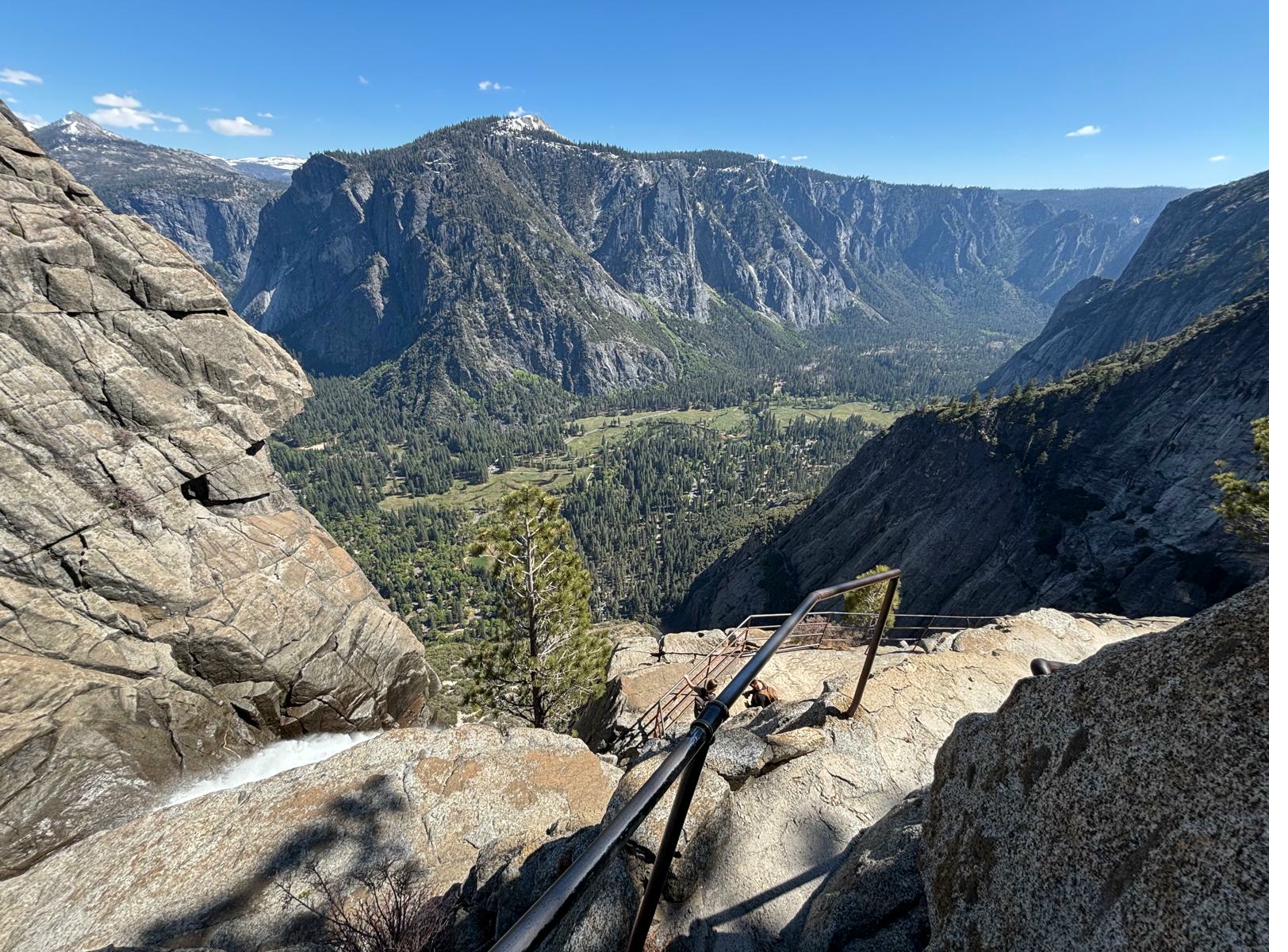
Half Dome rises 4,800 feet above the Valley floor — its distinctive shape is visible from throughout Yosemite West.
The Two Ways to Get a Half Dome Permit
1. Pre-season lottery (the main lottery): Applications open in early March for the entire coming season (late May through mid-October). Apply at recreation.gov. You can request up to 6 permits per application; if selected, all 6 are confirmed. Results are announced in late March. This is the best chance — enter early and apply with as many people in your group as possible.
2. Daily lottery: Two days before each hiking date, a smaller pool of permits (about 50% of daily allotment) is released via a same-day lottery at recreation.gov. Apply the evening two days before your target date and check results the following morning. This is how most spontaneous hikers get permits.
Half Dome hikers need to start by 5:30–6 AM. From Yosemite West, Happy Isles trailhead is just 18 minutes away. Guests driving from Fresno or Merced face 1.5–2 hour drives — meaning a 4 AM wake-up. From our cabin, you can sleep until 5 AM and still start the trail at perfect time.
Half Dome Hike: What to Expect
Distance: 14–17 miles roundtrip depending on route · Elevation gain: 4,800 feet · Time: 10–14 hours for most hikers · Difficulty: Very strenuous
The trail follows the Mist Trail past Vernal Fall (317 feet) and Nevada Fall (594 feet) before ascending through forest and granite slabs to the base of the cables. The cable section itself is 400 feet of 45-degree granite with two steel cables to hold. Most fit, healthy adults can complete it. The views from the summit extend 50+ miles across the Sierra Nevada.
What to Bring
This is not a casual day hike. Pack: 3+ liters of water (no water sources above Nevada Fall), high-calorie food for a full day, sun protection (you’re above treeline for hours), layers (summit can be 20°F cooler than Valley), gloves for the cables (metal is painful on your hands), and trekking poles if you have them. Start with a full breakfast — your Yosemite West cabin kitchen is ideal for this.
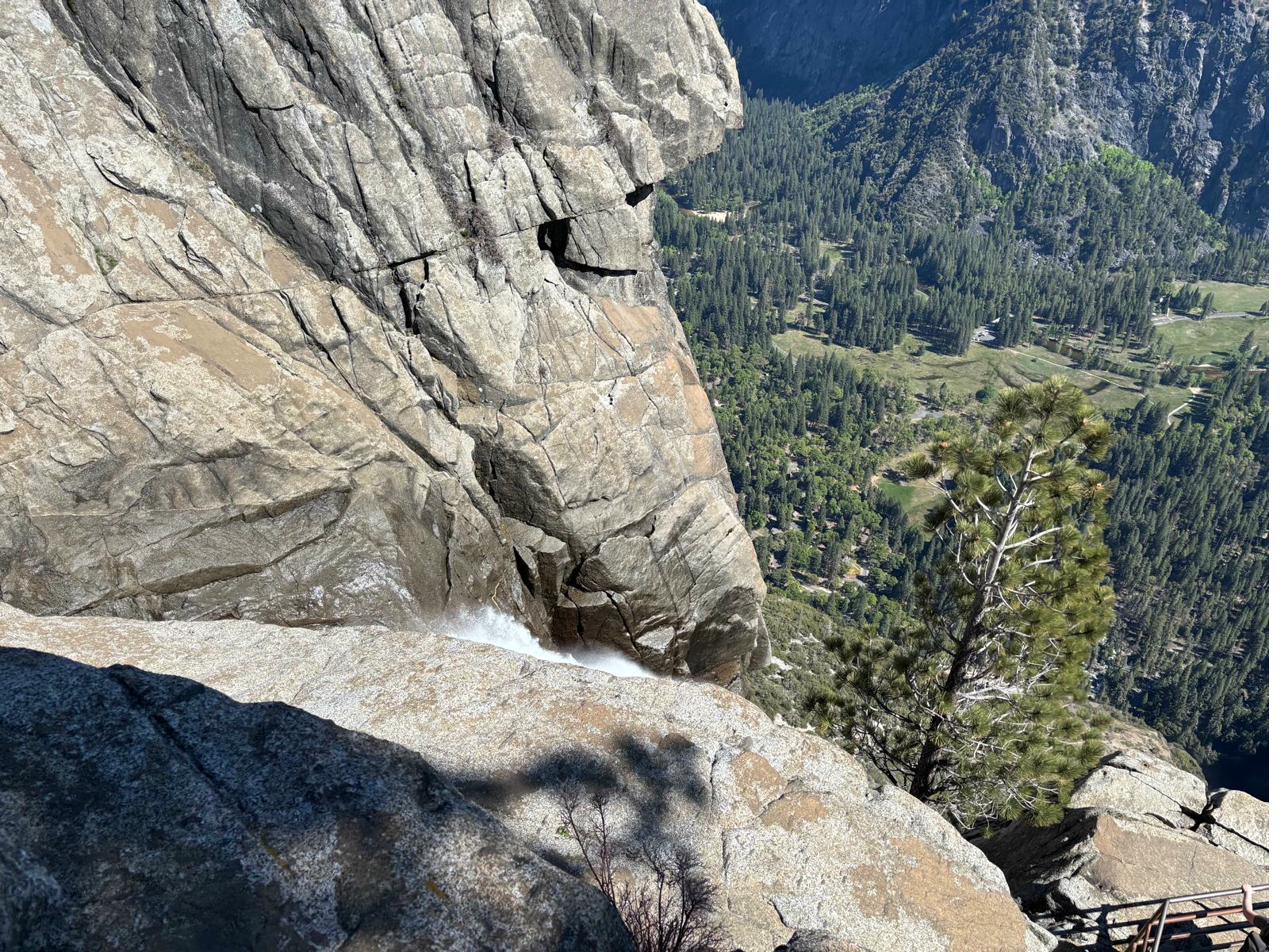
The scale of Half Dome is hard to comprehend until you see it in person — the dome rises nearly a vertical mile above the canyon floor.
Weather & Safety
Never attempt the cables during thunderstorms or wet conditions. Lightning on exposed granite at 8,800 feet is genuinely deadly — several fatalities have occurred. Check the Yosemite weather forecast (weather.gov/sto/yosemite) the evening before. If afternoon thunderstorms are forecast, plan to summit before noon. The general rule: be off the cables by 1 PM in July and August thunderstorm season.
Alternative: Sub Dome Only
If you can’t get a permit or prefer a less technical route, hiking to Sub Dome (the granite shoulder just below the cables) still requires the permit but gives you extraordinary views without the cables section. Alternatively, hiking to the top of Nevada Fall provides spectacular Half Dome views without any permit at all.
Half Dome Permit Tips That Actually Work
Apply in the pre-season lottery every year — it costs nothing to apply and your odds improve slightly if you applied and lost in previous years (the system tracks this). For the daily lottery, target weekdays in September and October when demand drops significantly. Consider a shoulder-season hike in late September — the cables are usually still installed, fall colors appear in the Valley, and permits are dramatically easier to obtain than in July.